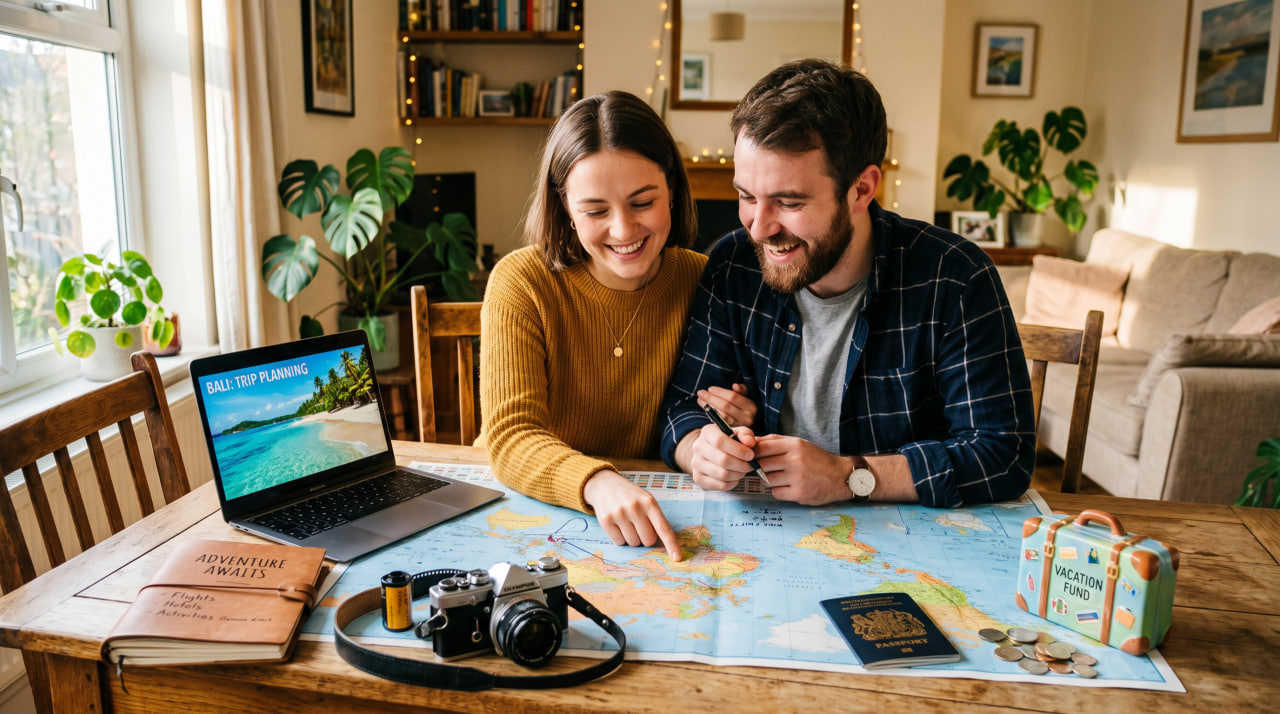
A quick framing note. “Budget travel” doesn’t mean the same thing for everyone. For some readers it’s a $500 weekend trip; for others, a multi-month international journey. The principles below apply at either scale — flexibility saves money, the same trip in a different city or month can cost half as much, and the largest savings come from where you go and when, not from squeezing the last 10% out of meals.
Step One: Decide What You’re Actually Willing to Compromise On
Before booking anything, spend ten minutes figuring out what matters most about this specific trip. Budget travel works when you optimize for what you actually care about and don’t pay for what you don’t. Most travelers default to “save on everything,” then end up unhappy when they cut something that mattered.
A few useful questions:
Is the destination the point, or the trip itself? If you want to be in Lisbon specifically, you’re committed to certain costs. If you’d be happy in any European city with good food and walkable streets, the cheapest available flight might lead to a better trip than the planned one.
What activities are you traveling for? Food, museums, hiking, beaches, nightlife, history. Knowing which two or three matter most lets you allocate budget where it actually delivers experience. A great dinner in Madrid is worth more than a generic dinner at a “scenic” restaurant overlooking nothing.
Where will you compromise? The realistic options: a longer or red-eye flight, a less central neighborhood, a smaller room or shared accommodation, fewer restaurant meals, fewer paid attractions, longer trip with cheaper daily cost. Pick which compromises you can live with cheerfully, not resentfully.
What’s a hard “no compromise” item? For some people it’s their own bathroom, or a comfortable bed, or eating somewhere good at least once a day. Honoring one hard “no” tends to keep the rest of the budget cuts feeling sustainable rather than punishing.
When you know what you’re optimizing for, the rest of the budget decisions get easy. Without that clarity, every choice feels like a trade-off you’re losing.
The Biggest Savings: Where and When
No travel hack saves as much money as choosing a cheaper destination or a cheaper time. A clever flight search saves you $50. Going in shoulder season instead of peak season can save you $500.
Travel in shoulder season. The weeks just before or after peak tourist season are dramatically cheaper while usually offering perfectly good weather and far smaller crowds. Europe in late April or October. Southeast Asia in May or September. Caribbean in May or November. Hotels are 30-50% cheaper, attractions less crowded, and the trip is often more pleasant than at peak.
Avoid school holiday weeks. Spring break, summer breaks, winter holidays, and Easter week dramatically raise prices on flights, hotels, and rentals — sometimes 2-3x. If you can travel on weeks adjacent to but not during school breaks, you save substantially.
Be flexible on the destination itself. Use Google Flights’ “Explore” map, Skyscanner’s “Everywhere” search, or Going.com’s deal alerts to see which destinations are cheap from your home airport on your preferred dates. Sometimes the cheapest flight from your city is to a place you’d love but hadn’t thought of. Letting price guide destination — rather than the other way around — is the single biggest budget travel hack.
Consider second-tier cities. Tokyo is expensive; Osaka is cheaper. Paris is expensive; Lyon is cheaper. New York is expensive; Philadelphia is cheaper. The second-most-famous city in a country often delivers 80% of the experience for 60% of the cost.
Trip length affects daily cost. A 10-day trip is usually cheaper per day than a 4-day trip — the flight cost amortizes over more days, you find better grocery rhythms, and accommodation rates often drop for longer stays. If saving the same total amount is the goal, sometimes a longer trip at a slower pace beats a short, intense one.
Flights: Where Patience Pays
Flights are one of the most price-sensitive parts of any trip. The same flight on the same route can vary by hundreds of dollars depending on when you book and how flexible you are.
Use multiple search engines. Google Flights, Skyscanner, Kayak, and Momondo each have slightly different inventory and price displays. Compare at least two before booking.
Use the flexible dates feature. Almost every flight search engine has a “flexible dates” or matrix view showing prices across a range of days. Shifting your departure or return by even one or two days frequently saves $100-300.
Check nearby airports. A flight to a different airport in the same metro area, sometimes paired with a cheap train or bus to your actual destination, can be substantially cheaper. Flying into a smaller hub in the same region and taking ground transport to your real destination is a classic budget-traveler move.
Book at the right time. Common guidance for domestic flights is to book 1-3 months ahead; for international, 2-6 months ahead. Booking very late or very early both tend to cost more. Set price alerts and watch for 2-4 weeks before booking — the route’s price patterns will become clear.
Consider a budget airline carefully. Carriers like Spirit, Frontier, Ryanair, and Wizz Air offer eye-catching base fares but charge extra for nearly everything: carry-on bags, seat selection, water on board. The “real” cost after fees can sometimes exceed a traditional carrier’s ticket. Calculate total cost including bag fees before deciding. Sometimes budget airlines are still cheaper; often they’re not.
Watch for hidden city, basic economy, and stopover restrictions. Basic economy fares often don’t allow seat selection, carry-on bags, or changes. A “hidden city” booking (where you intentionally skip a leg of a multi-leg ticket) can save money but airlines actively cancel return tickets when this is detected. Read the rules before you save.
Use a credit card with travel rewards if you’ll pay it off. The right credit card can earn enough points for a free domestic flight or a meaningful discount on international fares. This only works if you pay the balance in full each month; carrying a balance erases any rewards via interest charges.
A Realistic Budget Breakdown
Here’s how a typical $1,500 weeklong domestic trip and a typical $3,000 ten-day international trip might break down. Numbers are approximate and vary widely by destination; the point is the ratios.
Notice the buffer. Almost every trip costs more than the planned amount because of unexpected items — a transit pass, an extra meal, a souvenir, a ride-share when the bus stopped running. Building in 10% buffer is the difference between coming home with stress about money and coming home satisfied.
Accommodations: Where You Sleep Doesn’t Have to Cost the Most
Hotels in tourist-heavy areas are often a 40-50% premium for the same room quality you’d find a 10-minute walk away. The single highest-leverage accommodation hack is moving slightly outside the main tourist core.
Choose neighborhoods, not addresses. The hotel right next to the famous landmark is overpriced. The hotel four subway stops away that’s near a local restaurant district is cheaper, more authentic, and often nicer per dollar. Use map-based search (Booking.com, Google Hotels) and look for areas just outside the obvious tourist zones.
Consider short-term rentals for stays over 3-4 nights. Vacation rentals (Airbnb, Vrbo, and similar) often beat hotels on cost-per-night for longer stays, plus kitchen access can dramatically reduce food costs. For very short stays, hotels are usually simpler.
Hostels aren’t just for backpackers. Modern hostels increasingly offer private rooms at hotel-comparable quality for substantially less, especially in expensive cities. The social common areas are optional — you can stay in a private hostel room and never see the bar if that’s not your scene. Check reviews specifically for cleanliness and noise.
Check both direct and OTA prices. Sometimes booking direct (calling the hotel or using its own website) gets you a better rate, free upgrades, or perks not available on third-party sites. Sometimes the third-party site is cheaper. Compare both before booking.
Filter for value, not just price. A $60 hotel with a 7.5 rating is usually a worse deal than a $75 hotel with a 9.0 rating. Free breakfast, free Wi-Fi, free coffee, walking distance to transit — small inclusions add up. Look at total cost of staying there, not just the room rate.
Never wire payment for accommodations. The FTC specifically warns against this. Pay with a credit card, which gives you fraud protection and dispute rights. The State Department also flags vacation rental scams as a common travel-fraud category.
Food: The Hidden Budget Buster
Restaurant meals add up faster than most travelers expect. Three sit-down meals a day in any major city quickly approaches $100 per person — not from extravagance, but from defaulting to whatever’s convenient. A few habits cut food spending dramatically without making the trip feel deprived.
Eat one restaurant meal a day, not three. Pick the meal you most enjoy (often dinner) and make it a real meal. Eat breakfast at the hostel/hotel or from a small bakery; eat lunch from a market, food cart, or quick local spot for $5-10. You’ll spend a third of the food budget and eat one truly great meal a day instead of three forgettable ones.
Go to where locals eat. Restaurants on the main tourist street near the famous attraction are 2-3x more expensive than identical restaurants two blocks away. Walk five extra minutes; eat better food for less.
Use markets and grocery stores. Buying fruit, bread, cheese, and water from a local grocery store costs a few dollars and feeds you for a day. Eating something from the market for breakfast and lunch frees up budget for one nice dinner.
Lunch is cheaper than dinner. Many restaurants offer lunch specials at 30-50% lower prices than dinner for the same food. If there’s a famous restaurant you want to try, going for lunch instead of dinner can cut the bill substantially.
Drink water. Soft drinks and alcohol add up fast in restaurants. In many countries tap water is fine; in others, bottled water from a grocery store is much cheaper than restaurant servings. Coffee and tea from cafés is cheaper than restaurant drinks too.
Skip the hotel breakfast unless it’s free. Paid hotel breakfasts are almost always overpriced. A €15 hotel breakfast buffet vs €4 at the bakery on the corner is one of the easiest swaps in budget travel.
Local Transit: Cheap Almost Everywhere
Taxis and ride-shares from the airport into the city are one of the biggest avoidable expenses of a trip. Most major cities have a train, bus, or subway from the airport for a fraction of a taxi fare. The 30-minute extra time is worth the $30-60 savings.
Research airport-to-city transit before you arrive. Know the train name, the line number, where to buy tickets, and how long it takes. This 10 minutes of pre-trip research saves you from the “panic-taxi” that happens when you land tired with no plan.
Get a transit card or pass on day one. Most cities sell multi-day or unlimited transit passes that pay for themselves after 3-4 rides. Single-ride tickets in tourist zones are often expensive; passes flatten the cost.
Walk when reasonable. European and Asian city centers are often walkable in 20-30 minutes between major attractions. Walking is free, exposes you to the city, and is often faster than getting onto a packed subway for one or two stops.
Rent bikes or use bike-share. Many cities have inexpensive bike-share systems (often a few dollars for a full day pass). Faster than walking, free of traffic, often more enjoyable than the metro.
Free and Cheap Activities
Paying for attractions adds up surprisingly fast. Three $30 museum tickets become $90 before you’ve eaten. But many of the best experiences in any city are free or nearly free.
Free walking tours. Most major cities have tip-based walking tours that cost only what you can afford to give the guide. Often 2-3 hours, often genuinely good. A great way to orient on day one.
Museum free days. Many museums offer free entry one day a month, or free entry after a certain hour. A quick search before your trip identifies which days work for which museums.
Public spaces. Parks, beaches, riverside walks, plazas, and markets are free. Some of the most memorable parts of any trip happen in these public spaces, not in paid attractions.
City passes if you’ll use them. Many cities offer “city passes” that bundle attractions, transit, and discounts. Useful if you’ll visit 3+ paid attractions. Useless if you’re not actually going to those attractions. Do the math before buying.
Free events. Concerts, markets, festivals, and street performances are often listed in local tourist websites. Spending an afternoon at a free local festival often beats a paid attraction.
Avoiding Scams (The Biggest Hidden Cost)
No cost destroys a budget faster than getting scammed. Travel scams are common and growing — and according to the FTC’s tips for scam-free travel, the same patterns repeat across most schemes. A few habits virtually eliminate the worst risks.
FTC-Endorsed Habits That Stop Most Travel Scams
Avoid “free” trips that require you to pay. The FTC specifically warns that any “free vacation” that pressures you to pay fees, taxes, or to verify your identity with a credit card is almost certainly a scam.
Pay by credit card. The FTC specifically recommends credit cards because they give you fraud protection and dispute rights that wire transfers, debit cards, cash, and prepaid cards do not.
Never wire-transfer payment for travel. Wire transfers, gift cards, cryptocurrency, and apps like Zelle or Venmo are virtually impossible to reverse. Any travel deal that requires these payment methods is a scam, full stop.
Verify before you book. Search the company name + “scam,” “review,” or “complaint” before paying anything. The FTC’s guidance is direct on this point.
Know the cancellation policy. Read the refund policy before booking flights, rentals, and rental properties. Many “great deals” become unrefundable if you have to cancel.
The State Department also flags rental scams as common. Scammers hijack real rental listings and rebook them as their own — you arrive at the property to find someone else is already staying there, and your money is gone. Book through major established platforms with buyer protection, and be especially cautious of “deals” found through unsolicited emails, social media ads, or direct contact from “owners” outside the main rental platforms.
For International Trips: Use the Official Resources
For travel outside the US, the U.S. State Department provides free, authoritative resources that most travelers never use — and that prevent expensive surprises.
Check the Travel Advisory. The State Department’s Travel Advisories use a 4-level system: Level 1 (exercise normal caution), Level 2 (exercise increased caution), Level 3 (reconsider travel), and Level 4 (do not travel). Per the State Department, Level 4 means life-threatening risks, and the U.S. government may have very limited or no ability to help, including during an emergency.
Use the International Travel Checklist. The State Department’s International Travel Checklist walks through documents, visas, insurance, medical preparation, and more. Especially useful for first-time international travelers.
Enroll in STEP. The Smart Traveler Enrollment Program is a free service that sends you alerts from the nearest U.S. embassy about security issues, demonstrations, and severe weather. Useful especially for less-traveled destinations or longer stays.
Check passport validity. Many countries require your passport to be valid for at least 6 months past your return date. Many travelers don’t realize this until they’re at the airport. Check expiration well in advance; renewal can take months.
Watch out for fake passport renewal sites. The FTC has issued specific warnings about official-looking websites that claim to renew or get you a passport. Use only travel.state.gov for actual passport services.
Common Mistakes to Avoid
Booking the cheapest flight without checking total cost. A $200 budget airline flight with $80 in bag fees, $30 in seat fees, and $40 to upgrade from a middle seat costs $350. The full-service airline at $280 with everything included is cheaper. Always calculate total cost.
Forgetting about travel insurance. A $100 trip-cancellation insurance policy is worth it for international trips where one delayed connection or canceled flight can cost thousands. Read the fine print — many policies don’t cover cancellations for reasons outside their specific list. A credit card that includes travel protection can sometimes substitute.
Overpacking the itinerary. Trying to see five cities in seven days produces an expensive, exhausting trip where most of the budget goes to transportation. Slower trips with fewer destinations are cheaper per day and usually more enjoyable.
Treating souvenirs and shopping as separate categories. They’re not. They’re part of the trip budget. Spending $200 on souvenirs at the end of a “$1,500 budget trip” means you actually spent $1,700. Decide in advance if shopping is in scope, and if so, budget for it explicitly.
Forgetting about foreign transaction fees. Many credit and debit cards charge 1-3% on foreign transactions. On a $2,000 international trip that’s $20-60 disappearing into bank fees. A no-foreign-transaction-fee credit card (many free ones exist) eliminates this.
Skipping basic preparation to save research time. The travelers who save the most are the ones who spend an extra hour researching transit, neighborhoods, and food in advance — not the ones who improvise everything and end up paying tourist prices for convenience.
Letting “I’m on vacation” justify every expense. The dangerous thought: “we’re only here once, so let’s do/buy/eat this.” Repeated 10 times a day, this single thought doubles the trip budget. Picking 1-2 things per day to splurge on is sustainable; saying yes to everything is not.
Cheap and Memorable Aren’t Opposites
The trips people remember years later usually weren’t the most expensive ones. They were the ones with a local meal someone recommended, an unplanned afternoon in a neighborhood you stumbled into, a long walk through an unfamiliar city at dusk, a hostel conversation with travelers from somewhere completely different. None of those experiences cost much money. Many of them happen specifically because the budget forced you off the tourist track.
The hierarchy of where to save: where you go and when (biggest savings); how you sleep and how you eat (next biggest); how you get around (modest); attractions and souvenirs (smallest, and where it’s worth being slightly more flexible). Get the first two right and you can be loose with the rest. Get them wrong and no clever hack on the rest of the budget can rescue the trip.
Pick your destination flexibly, travel in shoulder season, sleep slightly outside the tourist core, eat where locals eat, walk and use transit, prioritize the experiences that matter most to you, and protect yourself from scams that target travelers. The result is a trip that feels rich without breaking the bank — and the bonus is that it usually feels more like real travel than the expensive version would have.
This article is for general informational and educational purposes only. Travel costs, scam tactics, entry requirements, and advisory levels change frequently. Consult travel.state.gov for current international travel information, consumer.ftc.gov for current scam alerts, and your own bank/credit card provider for transaction-fee details before booking any trip.