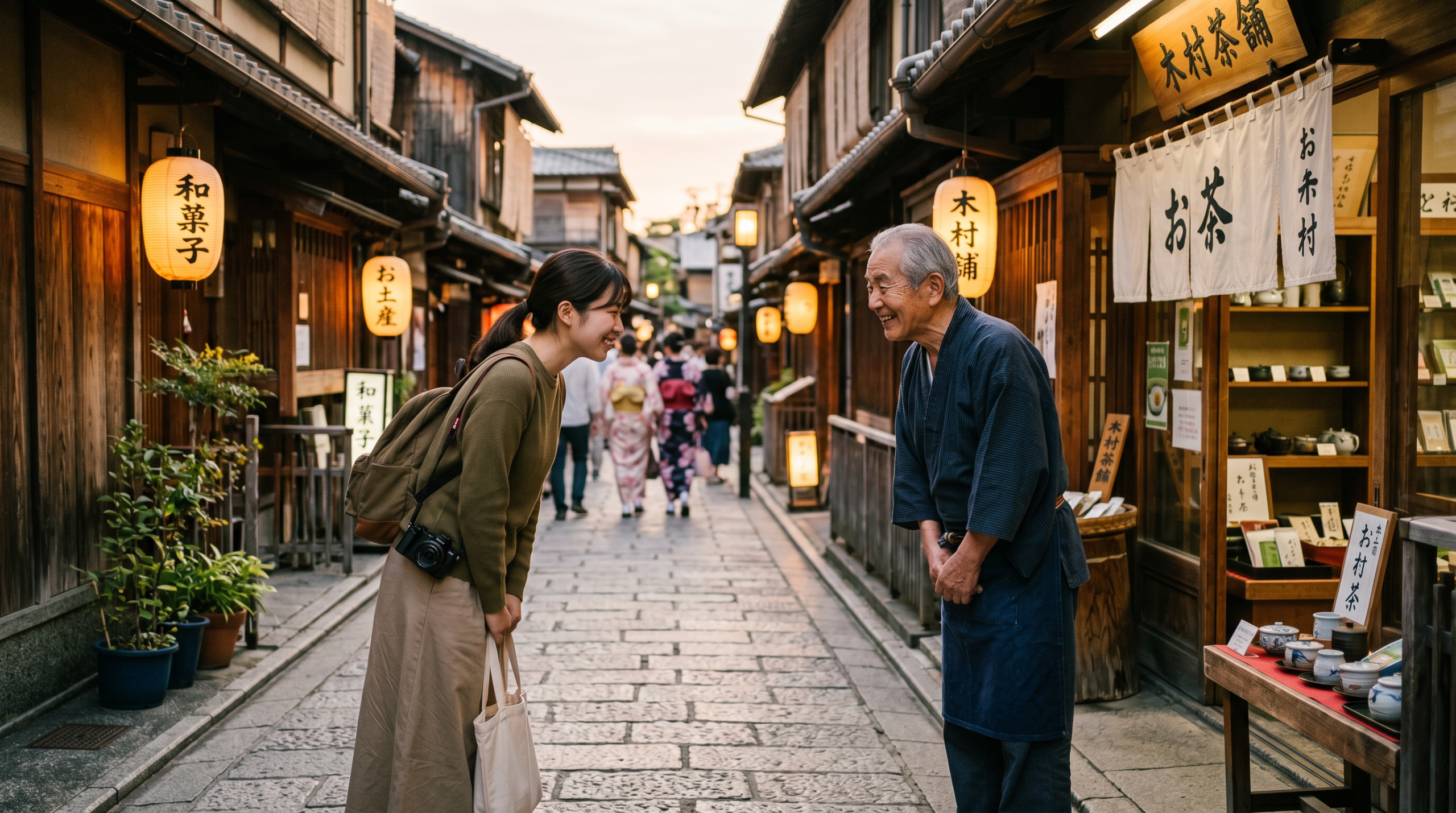
A quick framing note. This isn’t about guilt-tripping people for traveling. Tourism, done well, supports livelihoods, preserves cultures, funds conservation, and builds international understanding. The point isn’t to feel bad about visiting; it’s to visit in a way that adds rather than subtracts. The principles below are universal — they work in Tokyo, Rome, Marrakech, Cape Town, Sydney, your own hometown — and once internalized, they become second nature rather than a checklist.
The Underlying Principle: You Are a Guest
Almost every respectful-tourism rule comes down to one shift in mindset. The destination isn’t a backdrop for your experience; it’s a real place with real people who live their lives there long after you’ve gone home. Their daily routines, sacred sites, neighborhoods, and traditions exist for them, not for visitors. You’re a guest in someone else’s home, with all the responsibilities and courtesies that role implies.
This frame, once internalized, makes most decisions easy. Would you take a flash photo at someone’s grandmother’s funeral without asking? No — so don’t do it at a temple where locals are mourning. Would you climb on a stranger’s headstone for a photo? No — so don’t do it at a national memorial. Would you start loud personal calls in someone’s living room? No — so don’t do it in a quiet café in a foreign country. Most “ugly tourist” behavior happens because people forget they’re guests and start treating the place like a stage set.
The State Department’s International Travel Checklist explicitly recommends learning about local laws and customs before traveling, including what’s expected in dress, public behavior, and religious observance. The local laws don’t bend for tourists; visitors are subject to them just as residents are, often with harsher consequences for ignorance.
Before You Go: Research That Actually Matters
Twenty minutes of research before any international trip prevents most respect failures. The information is free, the effort is minimal, and the payoff is significant.
Greetings and basic phrases. Learn “hello,” “thank you,” “please,” “excuse me,” and “I’m sorry, I don’t speak [language]” in the local language. Five phrases, fifteen minutes of practice. The effort itself — even if your pronunciation is imperfect — communicates respect more than near-fluency would have. The locals you interact with notice immediately.
Dress norms. What’s considered acceptable dress varies enormously by destination, neighborhood, and venue. In many religious sites worldwide, shoulders and knees must be covered, shoes removed, hats sometimes removed (depending on tradition). Some countries expect more conservative dress in public spaces generally. Some cultures find casual dress at restaurants insulting. A quick search for “what to wear in [destination]” gives concrete guidance.
Tipping customs. Tipping practice varies wildly. In the U.S., it’s expected (18-20% at restaurants); in Japan, it can be insulting. In many European countries a small tip is appropriate; in some, the service is included. Get this wrong in either direction and you’ve either undertipped (perceived as cheap or rude) or overtipped (sometimes seen as patronizing). A 30-second search resolves it.
Hand gestures and body language. The “OK” sign means different things in different countries (some neutral, some obscene). Thumbs-up isn’t universal. Pointing with a finger is rude in many Asian cultures. Showing the soles of your feet is offensive in some Middle Eastern and Asian contexts. Touching someone’s head is taboo in parts of Southeast Asia. Most of these are easy to avoid once you know about them.
Religious and sacred observances. Is your visit overlapping with Ramadan, Passover, Diwali, or another religious period? Eating in public during Ramadan in some countries is genuinely offensive; in others it’s fine but appreciated when discreet. Specific sacred sites may have additional requirements. Knowing in advance lets you participate respectfully rather than discover the rules by violating them.
Local laws that differ from yours. Drug policies, LGBTQ+ legal status, alcohol rules, photography restrictions (some countries restrict photographing government buildings, bridges, military areas), public displays of affection, and other behaviors that may be legal at home but illegal at your destination. The State Department’s country-specific information pages list significant ones.
A Quick Reference: Common Cultural Difference Areas
At Religious and Sacred Sites
Religious sites — temples, churches, mosques, shrines, sacred natural sites — are where respectful-tourism habits matter most. These are working places of worship where local people pray, mourn, celebrate, and connect to traditions thousands of years old. They’re also, often, world-famous tourist attractions. Both things are true simultaneously, and being respectful means honoring the first identity even while engaging with the second.
Dress appropriately. Most religious sites have explicit dress codes — covered shoulders and knees is the most common, with additional requirements at some sites (head coverings, removal of shoes, removal of leather items in some Hindu and Jain temples). Bring a scarf or sarong; you can use it as needed. Showing up in beachwear at the Vatican, the Wailing Wall, or a major mosque is not a culturally neutral choice — it’s a clear statement that you didn’t consider the site worth dressing for.
Lower your voice. Move slowly. The volume and pace of a busy tourist site is wrong for a working place of worship. Speak quietly. Move slowly. Pause when ceremonies are happening rather than walking through them. Step aside for people who are actively praying.
Photography rules vary. Many religious sites prohibit photography entirely; many prohibit flash; many prohibit photographing people in prayer; some allow exterior shots but no interior shots. Look for posted rules before raising your camera. If unclear, ask. Never photograph people praying without explicit consent — the moment is theirs, not yours.
Don’t pose disrespectfully. Treating a sacred site as a backdrop for jumping shots, suggestive poses, or comedic photos is the kind of behavior that goes viral for the wrong reasons. The recent uptick in “tourist behaving badly at [sacred site]” videos has prompted real policy changes — some sites now restrict or ban tourists altogether, which is bad for everyone.
If you’re invited to participate, do so respectfully or politely decline. Sometimes local hosts invite visitors to take part in ceremonies. If you join, observe and follow what others do. If you’d rather not participate, decline politely and step aside; don’t make it a spectator event.
Photographing People
The single most consistent failure of modern tourism is photographing local people — especially children, vendors, performers, and people in distinctive clothing — without asking. It’s so common that some communities have become hostile to all photography, even by other locals. A few habits prevent this entirely.
Ask first. A gesture toward your camera and a questioning look conveys the request universally. Most people say yes. Some say no. Respect the answer. The 5 seconds of asking transforms the interaction from extraction (taking their image) to exchange (sharing a moment).
Don’t photograph children without parental permission. A photo of a beautiful local child is taken from the child’s perspective, an unrelated foreign adult pointing a camera at them. Most parents in most cultures are not comfortable with this. Always ask the adult accompanying any child.
Don’t photograph poverty for content. Photographs of homeless people, slum residents, beggars, and people in obvious distress — taken to share on social media — are extractive in a way that’s increasingly recognized as harmful. The people being photographed get nothing; the photographer gets engagement. If the photo wouldn’t be acceptable taken in your hometown of an equivalent person, it isn’t acceptable on a trip.
Be careful with indigenous communities. Some indigenous groups explicitly prohibit photography of certain ceremonies, certain individuals, or certain sacred objects. Their preferences override generic tourist behavior. Research before visiting; ask local guides; defer to community requests.
Some photos are illegal. Many countries prohibit photographing military installations, airports, bridges, government buildings, border areas, and police. Penalties can include detention. When in doubt, don’t.
At Natural Sites: The Leave No Trace Principles
National parks, wilderness areas, coral reefs, and other natural sites worldwide are governed by similar principles — known in the U.S. as Leave No Trace’s Seven Principles, supported by the National Park Service, U.S. Forest Service, Bureau of Land Management, and U.S. Fish and Wildlife Service. The principles apply equally to natural sites anywhere in the world.
The Seven Principles, In Practice
1. Plan ahead and prepare. Know the rules of the site, the weather, your route, and what to bring. Unprepared visitors damage sites and require rescue.
2. Travel and camp on durable surfaces. Stay on marked trails. Don’t cut switchbacks. Camp on hardened sites. The damage from a single off-trail step is invisible; the damage from millions of off-trail steps is everywhere.
3. Dispose of waste properly. Pack out everything you pack in — including food scraps, tissue, fruit peels. “Biodegradable” doesn’t mean “appropriate to leave behind.”
4. Leave what you find. Don’t take rocks, plants, shells, artifacts, or anything else. The rule scales: 1 million tourists each taking one rock removes a million rocks.
5. Minimize campfire impacts. Use existing fire rings or camp stoves. Don’t start fires where prohibited. Wildfires from “small” tourist fires destroy entire landscapes.
6. Respect wildlife. Observe from a distance. Don’t feed wildlife (it damages their health and behavior). Don’t approach for photos. Per NPS’s guidance, if an animal reacts to your presence, you’re too close.
7. Be considerate of other visitors. Quiet voices. Yield on trails. Don’t blast music. Other people came for the natural setting; your speaker shouldn’t redefine it.
These principles apply to natural sites anywhere — Patagonia, the Sahara, Kakadu, the Galapagos, your local hiking trail. The specific rules differ, but the underlying ethic is universal: leave the place better than you found it, or at minimum exactly as you found it.
Wildlife Tourism: The Ethical Minefield
Wildlife encounters — elephant rides in Thailand, tiger photos in Southeast Asia, swimming with captive dolphins, walking with lions in Africa — are heavily marketed and often exploitative. Many appear ethical and aren’t. A few habits help distinguish responsible from harmful.
Direct contact is usually a red flag. Riding elephants, holding wild animals for photos, swimming with captive dolphins, and similar experiences typically require those animals to be broken (often violently) for human interaction. If the experience involves direct touch or close contact with wild animals, the animal almost certainly suffered for that opportunity.
Sanctuaries vs. zoos vs. interactive attractions. Genuine sanctuaries focus on rescue, rehabilitation, and protection — usually with observation rather than interaction. They don’t breed animals for tourists, don’t allow direct contact in most cases, and operate transparently about their practices. Attractions marketed as “sanctuaries” that offer riding, holding, or close-contact experiences usually aren’t real sanctuaries.
Don’t feed wildlife — anywhere. This includes the cute monkeys at the temple, the pigeons in the square, the deer in the park. Feeding wildlife alters their natural behavior, damages their health, makes them dependent on humans, and creates dangerous habituation. The animal that approaches you for food is often killed by authorities once it becomes a problem. Don’t be the reason that happens.
Souvenirs from wildlife are usually illegal. Ivory, coral, shells from certain species, sea turtle products, exotic skins, certain wood and plant products — many are subject to international trade laws (CITES). Buying them funds poaching and is illegal to bring home. When in doubt, don’t buy.
Supporting the Local Economy
Where your money goes shapes the destination as much as how you behave. Tourism can either flow back into local communities or extract value out of them, depending on how visitors spend.
Eat at locally-owned restaurants. A family-run restaurant in any neighborhood beats a chain restaurant in every measure that matters — for food, for atmosphere, for the local economy. Look for places where locals actually eat (often a block or two off the tourist street).
Stay at locally-owned accommodations when possible. Independent hotels, guesthouses, and B&Bs put more money into the local community than international chains. They’re often less expensive too.
Hire local guides. A walking tour from a local guide costs about the same as a generic tour bus and produces dramatically more interesting and authentic experiences. Look for guides certified by local tourism boards or recommended by accommodations.
Buy from local artisans, not imported souvenirs. The “I ❤ [city]” t-shirt is almost certainly made in another country. The hand-painted ceramic from the local craftsperson supports the actual culture. Look for craft markets, workshops, and cooperatives.
Pay fairly. Don’t bargain to extract value. In cultures where bargaining is expected, do it respectfully — the goal is a fair price for both parties, not the rock-bottom price. The $5 you “saved” via aggressive bargaining is significant to the vendor and trivial to your trip.
Tip when expected. In countries where tipping is part of how service workers earn their livelihoods (the U.S., for example), tipping is not optional courtesy — it’s economic infrastructure. Tipping like a local supports the people serving you.
Overtourism: Your Individual Choices Matter Collectively
UNESCO’s World Heritage and Sustainable Tourism Programme, established in 2012, exists specifically because increasing tourist flows have begun to damage the cultural and natural sites that draw visitors in the first place. Cities like Barcelona, Venice, Amsterdam, Bali, and others have implemented restrictions because the scale of tourism is overwhelming local infrastructure and quality of life.
A few practical responses for individual travelers:
Travel in shoulder seasons. The two months immediately before and after peak season see far fewer crowds, lower prices, and less destination stress. The experience is usually better; the impact is lower.
Consider second-tier cities. The lesser-known cities and towns in any country are often more interesting than the famous ones, and they need tourism revenue. Lyon over Paris, Porto over Lisbon, Kanazawa over Kyoto.
Stay longer in fewer places. Spending a week in one city instead of three days each in three cities reduces transport emissions, deepens your experience, and distributes your spending more concentrated where it helps. Slow travel is more sustainable in every dimension.
Respect crowd-control measures. When sites implement timed entry, daily caps, or specific paths to handle visitor flow, follow them. They exist because previous unrestricted tourism damaged the site.
Don’t add to the “Instagram problem.” Specific viral spots — the lavender field, the seaside cliff, the secret beach — get trampled when millions of visitors arrive for the same photo. If a destination is asking visitors to stop coming, listen to them.
Common Mistakes to Avoid
Assuming everyone speaks English. Many people abroad do speak some English, especially in tourist areas. Assuming it as a default — especially in non-English-speaking countries — is rude. Learn the basic phrases. Use them.
Loud, dominant behavior. Speaking loudly, taking up space, being demanding with service staff, complaining publicly about how “different” things are. None of this is universal “American” behavior, but it’s common enough to be a stereotype for a reason. Match the volume of the place you’re in.
Treating service workers as accessories to your experience. Hotel staff, guides, restaurant servers, drivers — these are people doing jobs, not characters in your trip. Treat them with the respect you’d want for someone doing equivalent work at home.
Public criticism of the destination. Loudly complaining about how something at the destination is “wrong” — the toilets, the traffic, the food, the service speed — within earshot of locals is offensive. It’s their place, not yours; if it’s not working for you, leave quietly.
Wearing clothes appropriating cultures. Wearing sacred items, traditional dress, or culturally significant clothing as a tourist costume is offensive in most cultures. The exception is when explicitly invited by the culture itself (a host puts a head scarf on you, the tour includes putting on traditional dress in a respectful framing). Otherwise, leave it alone.
Climbing or touching things you shouldn’t. Statues, ruins, archaeological sites, sacred trees. Even when there’s no posted sign, the rule is: don’t touch the historical thing. Oils from skin damage stone over centuries; weight on ruins accelerates collapse.
Performing for social media at sites that aren’t for performances. Memorials, sacred sites, working communities, places of mourning. They aren’t sets for content creation. If your photo wouldn’t be appropriate at a similar site at home, it isn’t appropriate abroad.
Ignoring posted rules because “I’m a tourist.” Tourist status doesn’t grant exceptions to local laws or site rules. The rules exist because they’re necessary. Following them is the baseline, not the courtesy.
A Good Tourist Is Quietly Memorable for the Right Reasons
The traveler who thinks about being respectful tends to disappear into the destination in a good way — fits the volume and pace of the place, supports the local economy without theatrics, asks before photographing, dresses appropriately at sacred sites, leaves no trace at natural ones, treats service workers as people, and learns enough of the language to greet someone properly. Locals notice, but quietly. The tourist nobody complains about and many appreciate is the one to be.
None of this requires sacrificing the experience. Respectful tourists usually have better trips — they get invited to things, recommended things, treated warmly, given fair prices. The performative, dominating tourist gets short tempers, inflated prices, and the bad service reserved for difficult guests. Being respectful isn’t a sacrifice; it’s the most reliable way to actually enjoy where you’ve gone.
The next trip you plan, spend 20 minutes on the research. Learn five phrases. Find one locally-owned restaurant. Note the dress code at the religious sites. Then go, observe before acting, ask before photographing, and assume good faith from the people you meet. The framework becomes habit fast — and within a few trips, respectful tourism stops being a checklist and becomes simply how you travel.
This article is for general informational and educational purposes only. Cultural norms, local laws, and site-specific regulations vary widely and change over time. Consult the State Department’s destination-specific guidance (travel.state.gov), UNESCO’s World Heritage and Sustainable Tourism resources (whc.unesco.org), the National Park Service’s Leave No Trace guidance (nps.gov), and local tourism authorities for current, location-specific advice before traveling.
Leave a Reply